Avinor: Easier travel with artificial intelligence
Service design
UX-design
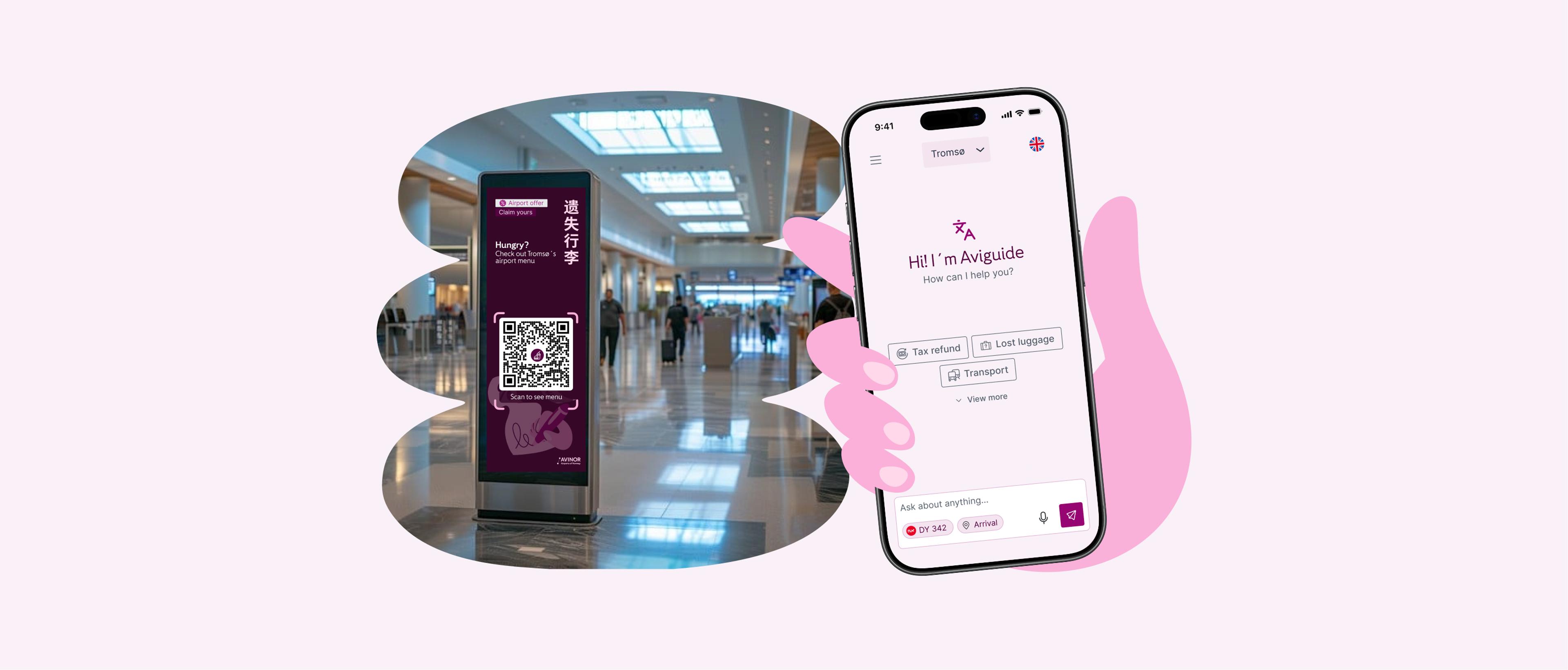
I 2025, we started working with Avinor to build the travel assistant of the future. Since the start of the project, we have contributed with service and UX design. The result is the travel assistant "Aviguide," which supports travellers at Norwegian airports. Aviguide was launched at Tromsø Airport in 2025 and is being rolled out to other major Norwegian airports throughout 2026. Variant has also provided expertise on how AI can be implemented in ways that deliver real value.
Service design
Service design has been an important part of the project from the start. Qualitative and quantitative data collection has provided us with the understanding we needed to set a clear direction for the product, despite the complexity of the systems it interacts with. The work revealed, among other things, that many travellers have information needs that are not being met. This could include information about transportation, navigation, check-in, baggage retrieval, and so on.
Many travellers have information needs that are not being met. This results in queues developing in critical parts of the airport.

Hypothesis driven development
When it was time to develop solutions, we contributed with our expertise in product development. Innovation projects like this often carry the risk of building the wrong thing, or building the right thing at the wrong time. To reduce this risk, the team used a hypothesis-driven approach. With this approach, regular tests are conducted to see if the results align with expectations. This makes it easy to change the product’s direction along the way before large amounts of resources are invested.
Continuous work with insights, regular user testing, and a robust system for A/B testing provided a strong framework for hypothesis driven development. This also supplied a data basis for decisions made along the way, which helped secure buy-in among internal and external stakeholders.
AI as the core
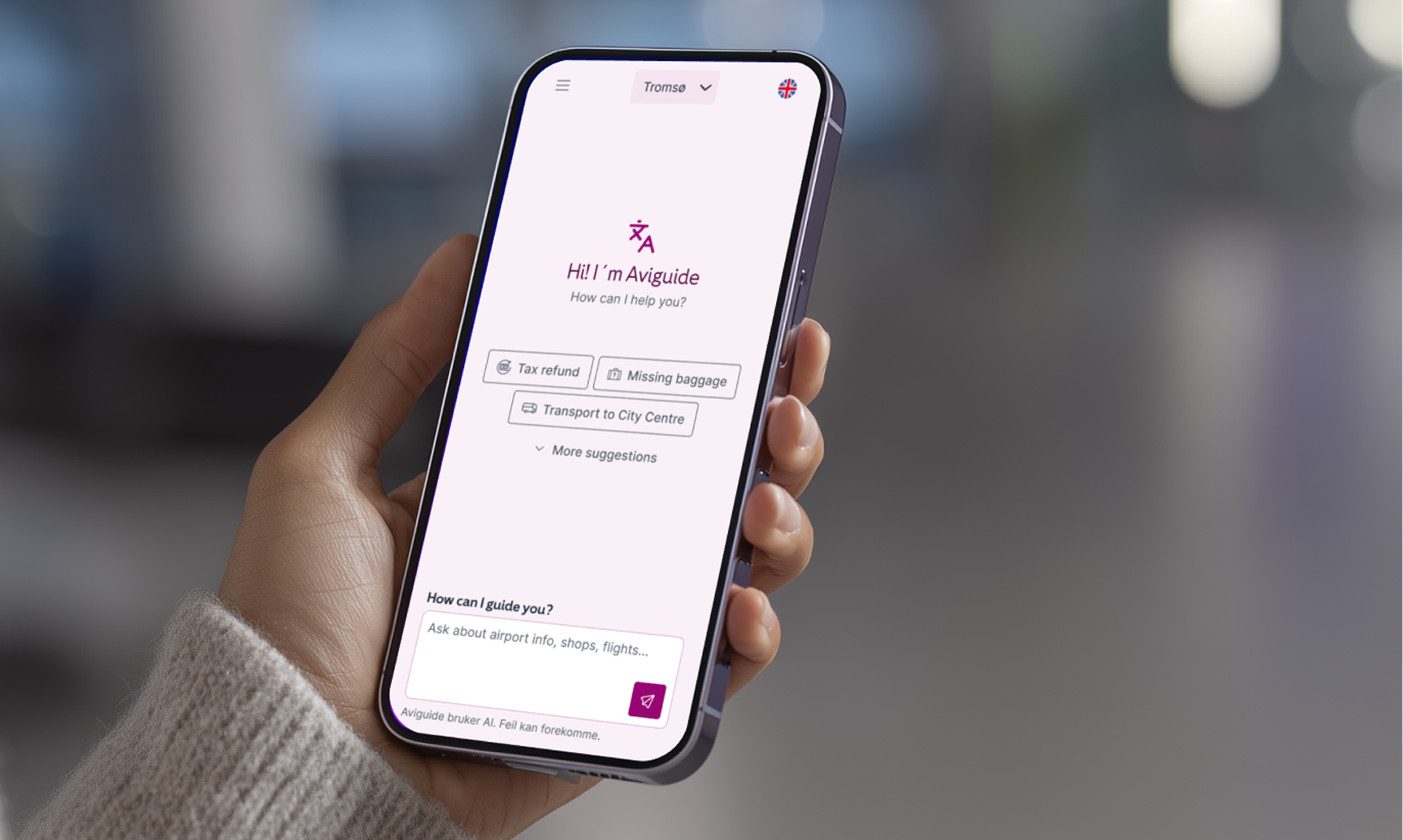
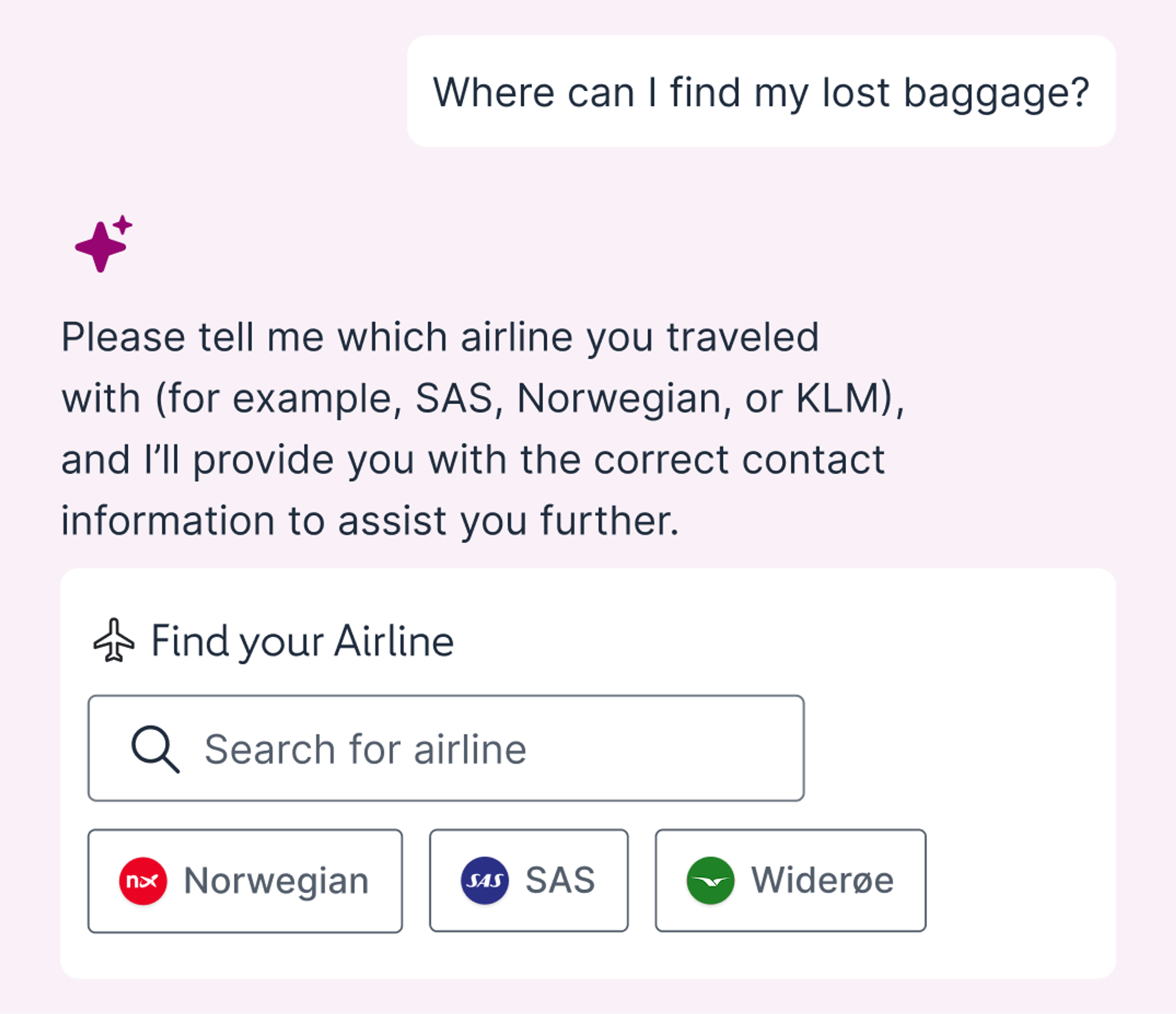
The project has aimed to leverage AI to build a high-quality product, develop internal expertise, and demonstrate to the rest of the organisation how this technology can be integrated into their products. For the team, it was important to identify where the technology could genuinely enhance the user experience. The result is a digital travel guide centered around an enriched AI-chat. The chat utilises user interface components to highlight functionality and simplify usage.
The team also implemented a version of the AI chat on Avinor’s customer service pages. In the first few months, the chat has handled a large portion of inquiries that would normally have required manual processing. This has resulted in a reduction of manually handled inquiries by approximately 27%.
Looking ahead
Aviguide was gradually launched at Tromsø Airport in the summer of 2025, and we continue our collaboration with Avinor to further develop the product in 2026. The peak season in Tromsø (the winter) will be an important test to observe how travellers respond to the product. This will also reveal how it should be adapted for rollout at several major Norwegian airports over the coming years.
In project

Jon Hofsli

Ole Petter Klæstad
Featured Projects

Ruter: making Ruter's transport available to everyone
Ruter faced a digital transformation as existing solutions no longer met modern usability standards. Ticket purchasing was overly complex, travel information was scattered, and customers struggled to find up-to-date information during disruptions.
Energy AI provides companies with an estimate of emissions based on the costs a company incurs. This often involves large amounts of numbers, graphs, and advanced technical terms that can be difficult to understand without specialist expertise. Many find it overwhelming to navigate all this data.
Digdir: Knowledge assistant
A tool that uses generative artificial intelligence to extract the information you need from the sources you trust.